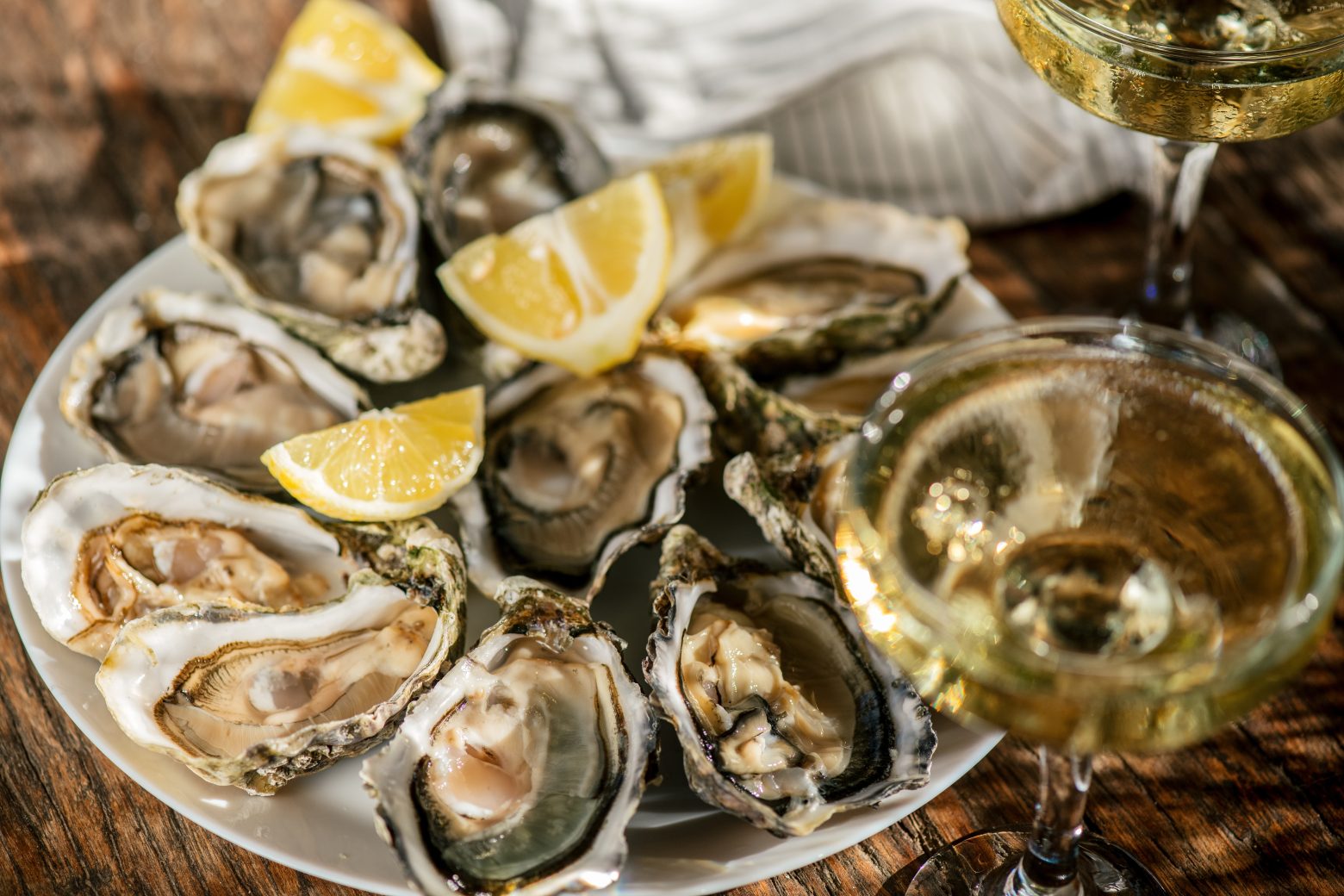
Discover the differences between East Coast, West Coast and Gulf Coast oysters—from texture and flavor to must-know varieties—so you can order like a true connoisseur.
Few things trump the feeling of indulging in refreshing shucked oysters sitting atop a bed of ice on a warm summer day. If you are a seafood enthusiast like me, you may notice a variation in texture, size and sometimes flavor of oysters. Still, you may not be able to identify the exact type of oyster you like on paper. Let this be your guide to all things oyster, so the next time you’re ordering this delicacy, you’ll be an expert.
East Coast Oysters (Atlantic):
General Traits:
- Shells: Longer, more narrow and teardrop-shaped.
- Flavor: Briny, clean, crisp and often mineral-forward.
- Texture: Firmer and leaner due to colder waters.
Notable Varieties:
Blue Point (Long Island Sound, NY/CT)
- Size: Medium to large.
- Flavor: Mild brine with a slightly sweet finish.
- Texture: Meaty and dense.
Notes: A crowd-pleaser; often used in raw bars.
Wellfleet (Cape Cod, MA)
- Size: Medium.
- Flavor: Bold brininess up front with a clean, vegetal finish.
- Texture: Crisp, plump meat.
- Notes: A quintessential New England oyster.
Glidden Point (Maine)
- Size: Large.
- Flavor: Deep brine, buttery mid-palate, sweet finish.
- Texture: Exceptionally firm.
- Notes: Pristine cold waters create a refined, balanced flavor.
West Coast Oysters (Pacific)
General Traits:
- Shells: Deeper cup, more rugged.
- Flavor: Creamy, cucumber-like, melon or lettuce notes.
- Texture: Soft, plump, and silky.
YOU MAY ALSO LIKE: ELEVATED WORLD-CLASS DINING EXPERIENCES WORTH THE JOURNEY
Notable Varieties:
Kumamoto (Originally Japan; now WA/CA)
- Size: Small.
- Flavor: Sweet, fruity, low-brine, often described as “nutty.”
- Texture: Creamy, custard-like.
- Notes: A favorite for beginners and oyster aficionados alike.
Hama Hama (Hood Canal, WA)
- Size: Medium.
- Flavor: Mildly salty with hints of cucumber and melon.
- Texture: Meaty but tender.
Notes: Sustainably farmed and very consistent in quality.
Fanny Bay (British Columbia)
- Size: Medium.
- Flavor: Moderate brine with a sweet, mineral finish.
- Texture: Slightly chewy.
- Notes: Good balance of East and West Coast characteristics
Gulf Coast Oysters
General Traits:
- Shells: Large, thick and often irregular.
- Flavor: Mild brine, earthy, sometimes metallic.
- Texture: Soft, more delicate, less refined.
Notes: Ideal for cooking—grilled, fried or in stews.
YOU MAY ALSO LIKE: HOW TO HOST THE CLAMBAKE THAT WILL IMPRESS YOU GUESTS
Apalachicola (Florida Panhandle)
- Size: Large.
- Flavor: Mild saltiness, with a buttery finish.
- Texture: Tender and soft.
- Notes: Known for high yields and warm-water farming.
Pro Tips for Tasting Oysters:
- Start briny, end sweet: Begin your tasting with high-salinity East Coasters, and finish with creamy West Coast varieties or Belons.
- Chew, don’t just slurp: Chewing releases the full complexity of the oyster’s flavor.
Mind the mignonette: A light, vinegar-based sauce enhances flavor without masking it. Avoid heavy sauces when tasting premium oysters.